Fuel costs creep up quietly. One extra kilometre here. Five minutes of idling there. It appears that the bill is loaded towards the end of the month than it would otherwise. One of such wastes is referred as a drip-drip waste and is resolved with the help of the route optimisation software Australia.
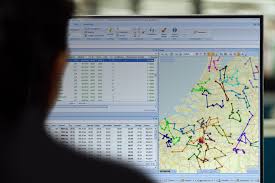
It begins by bringing it nearer. Routes stop wandering. Car vehicles are also not stolen via suburbs as they are stolen to tourists. Needless to say, that, on looking at it you discover the fact of an open correspondence between all the stops and the other. Less driving means less fuel. Simple maths. Big impact.
Time savings follow quickly. The drivers will not waste many hours by evading the traffic jams. No crowded in delivery-window such as with the afterthought but in rational sequence. The day flows. The arrests are made at the areas that have less traffic. And in time when he pleases he will have his turn.
On the one hand the manager of one of the fleets stabbed that their drivers could race the clock and lose. The enemy was not again the route that had been changed to optimised routes clock. The changes that followed were eliminated. The unwarranted overtime was also reduced without the stress.
Idingling has the tendency to conceal the wastage of fuel. Sitting in congestion. Waiting at closed docks. Going round a premature street. A slit is made by which snakes are cut. The vehicles would be counted and they would be redirected towards the problem on time.
Other than fuel costs also decreases. As a result, the tyre and brakes wear will be minimal with the means of a few kilometres being covered. Inter-service services have long duration. On the one hand, this abuse of vehicles cannot be noticed so obvious at the end of the week. Maintenance budgets are not in their peaks due to some unknown reasons.
Dispatch teams save time too. It does not take half a day to plan. Routes generate quickly. Changes don’t trigger panic. Add a delivery. Remove a vehicle. The system is not dramatic in regard to re-calculation. And the less bedlam the less blunders have.
The resultant satisfaction to the customers is attributed to the fact that there is no additional effort. Meanwhile the concerned BTAs decrease failure to deliver. Low repeat trip would constitute low returns. Such would save itself on fuel and man power. The other advantage is that the satisfied customers will make fewer calls and this can be considered to be a saving grace to everyone.
Reality is turned into theorizing. The managers would be in a position to comprehend the paths that are more expensive. Which days burn extra fuel. Which patterns repeat. The judgments are also more acute because the gut judgment numbers are substituted with the numbers.
It has unconscious self-confidence. Teams stop firefighting. Drivers stop apologising. Fire planners put their hands on fire. It was only explained by the fact that we did not work harder, as one of the managers explained. We have eliminated energy wastage.
The cost maximisation software does not present such dramatics in the reduction of the cost. Infection, day and hour and hour, inefficiency. Less fuel burned. Less time lost. The drain that no one had ever seen is being wasted with less cash.
And partly the working is made aerial where the road way sense.